Fiber Line · 10G
A standalone 10G media converter is a rare box — and it is not in ONV's catalogued converter line, which tops out at gigabit. Here is how 10G copper-to-fiber conversion is actually built from this range.

Accuracy first: the ONV media converter catalogue — 14 models — is a gigabit and 10/100M line. There is no catalogued standalone 10G media converter, and any page claiming otherwise would be inventing a product. What the range does offer is the standard industry way of converting 10G between copper and fiber: an SFP+ port. The aggregation and core switches carry 10G SFP+ uplinks (and the core flagship is 24 × 1/10G SFP+); fit the module that matches your fiber and the 'conversion' is a port, not a box.
This is usually the better engineering anyway: a switch port gives you management, monitoring and a spare-parts story, where a standalone 10G converter is a blind, single-purpose device. The pattern below covers the realistic cases — a 10G copper server or workstation reaching a fiber backbone, and a 10G link between two switches across a campus. For a one-off point conversion where a switch is genuinely unwanted, tell us the link details in the inquiry; if the build cannot be met from the catalogue, we will say so plainly.
10G SFP+ platforms from the aggregation/core and PoE catalogues — the conversion points (official product names).
| Model | Official product name |
|---|---|
| ONV56024F | 10G uplink 26-port Ethernet switch |
| ONV56016F | 10G uplink 18-port Ethernet switch |
| ONV56168FM | 10G uplink 16-port L3 managed Ethernet switch |
| ONV68240-2QFM | 10G 26-port L3 managed core routing switch |
| ONV56168FM-4TF | 10G uplink 16-port L3 managed Ethernet switch |
| ONV56012FM | 10G 12-port L3 managed Ethernet switch |
| ONV-POE56024PF | 10G uplink 26-port PoE switch |
| ONV-POE56016PF | 10G uplink 18-port PoE switch |
| ONV-POE56036PFM | 10G uplink 36-port L2+ managed PoE switch |
| ONV-POE56052PFM | 10G uplink 52-port L2+ managed PoE switch |
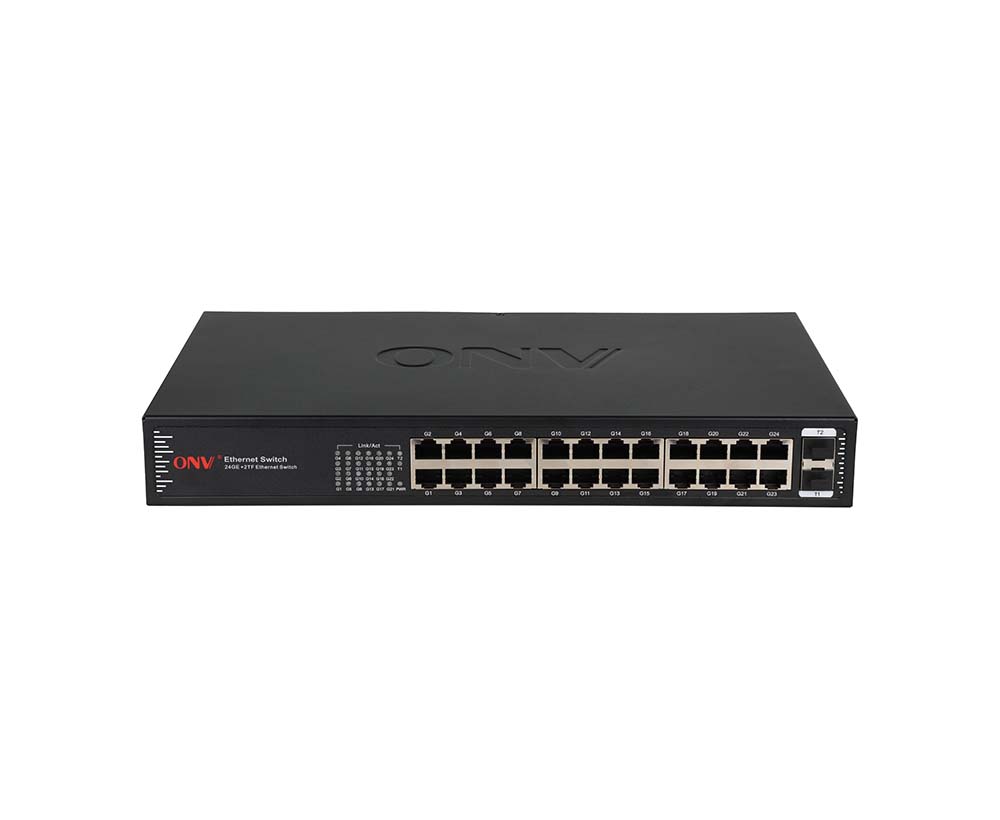
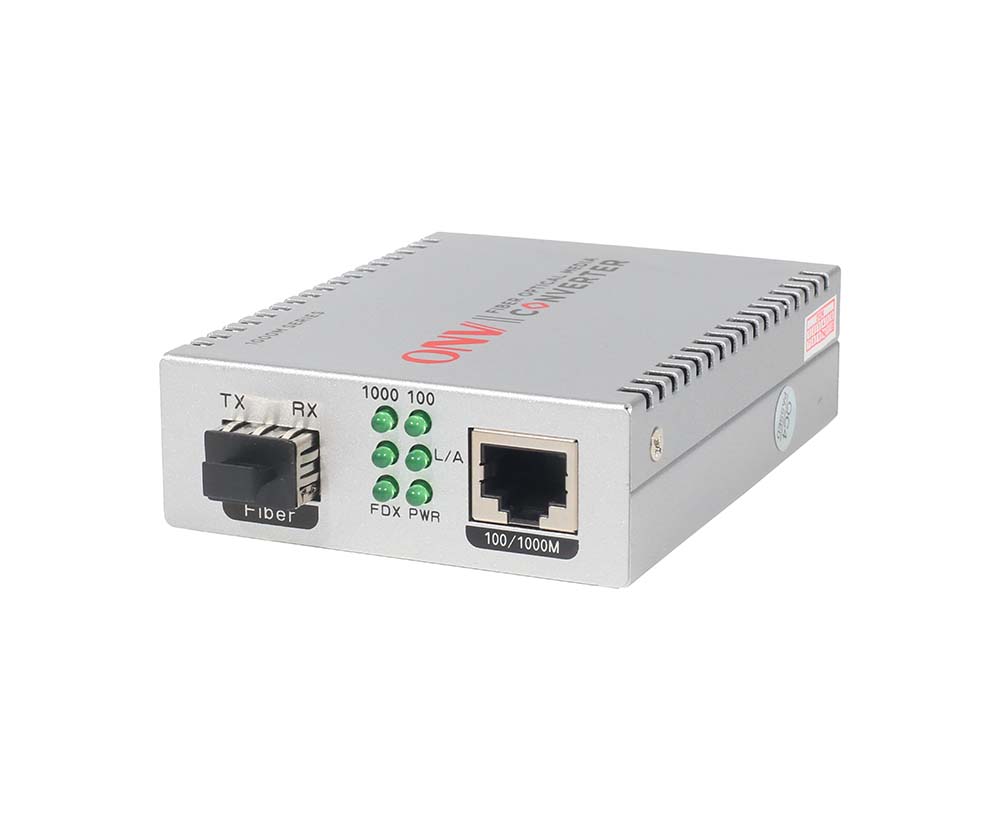
The extreme case: the ONV68240-2QFM core — 24 × 1/10G SFP+ ports at 880 Gbps. Any of its ports, fitted with the right module, is a managed 10G fiber endpoint; copper 10G devices land on the aggregation layer beneath it.
| Parameter | Datasheet value |
|---|---|
| Fiber ports | 24 × 1/10G SFP+ fiber ports |
| Switching capacity | 880 Gbps (non-blocking) |
| Forwarding rate | 654.72 Mpps @64byte |
| MAC address table | 32K |
| Buffer memory | 32M |
| Management | SNMP v1/v2/v3, browser-based Web management |
| Dimensions | 442.5 × 300 × 44.5 mm |
| Operating temperature | -10°C to +50°C |
Ask first whether the 10G link is really a conversion problem or a switching problem. Two switches to join: SFP+ ports both ends, done. A copper 10G device to reach fiber: land it on the nearest switch with a 10GBASE-T port or SFP+ + copper module, and let that switch own the fiber uplink. Only a truly isolated point-to-point demand justifies hunting a standalone converter — and that hunt starts with an inquiry describing the link, not a catalogue order.
Data-centre and server-room links, campus 10G backbones, high-bitrate NVR/storage connections and 10G uplinks between buildings.
Because at 10G the economics flipped: an SFP+ switch port with a module costs little more than a dedicated converter and adds management and monitoring. The catalogue follows that reality rather than stocking a box few designs should use.
SFP+ to 10GBASE-T modules exist for short copper runs; reach and heat are their limits. State your copper distance in the inquiry and we will confirm the module option against the switch selected.
Send your port count, per-port power and uplink requirements — we reply with the exact models, datasheets and a quotation. MOQ and lead time are confirmed per model and order scope in the quotation.
Fiber-port switching at every layer.